
- The Apocalypse Of The Codex Brucianusrejected Scriptures List
- The Apocalypse Of The Codex Brucianusrejected Scriptures Study
- The Apocalypse Of The Codex Brucianusrejected Scriptures Pdf
- The Apocalypse Of The Codex Brucianusrejected Scriptures Verse
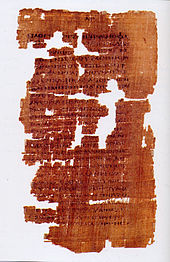
Some think the coronavirus is one of the four horsemen of the apocalypse. Many people on Twitter have been saying that they believe the virus is a sign that the apocalypse is coming, claiming. The Apocalypse Codex is the fourth novel in the projected nine-book The Laundry series by Charles Stross. This doesn't include the novels and short-stories which he has been prone to writing and I have enjoyed tremendously. Scripture, also called sacred scripture, the revered texts, or Holy Writ, of the world’s religions.Scriptures comprise a large part of the literature of the world. They vary greatly in form, volume, age, and degree of sacredness, but their common attribute is that their words are regarded by the devout as sacred.Sacred words differ from ordinary words in that they are. The books in Codex Ambrosianus appear to be arranged in historical, rather than traditional canonical, order. Codex Ambrosianus is the only Syriac manuscript to contain the Apocalypse of Baruch and IV Ezra in full. The manuscript was discovered by Antonio Ceriani in 1866 and published in 1876-1883. It was moved to Milan in the 17th century. SYRIAC APOCALYPSE OF EZRA THE APOCALYPSE OF THE CODEX BRUCIANUS (two versions) II ENOCH MERILO PRAVEDNOE APOCRYPHAL FACTS The Gospel of Eve The Testaments of the Twelve Patriarchs (no text) The Life and Death of our Father Abraham the Just, Written According to the Apocalypse in Nice Words The Testament of Solomon (no text).

NPR’s sites use cookies, similar tracking and storage technologies, and information about the device you use to access our sites (together, “cookies”) to enhance your viewing, listening and user experience, personalize content, personalize messages from NPR’s sponsors, provide social media features, and analyze NPR’s traffic. This information is shared with social media, sponsorship, analytics, and other vendors or service providers. See details.
You may click on “Your Choices” below to learn about and use cookie management tools to limit use of cookies when you visit NPR’s sites. You can adjust your cookie choices in those tools at any time. If you click “Agree and Continue” below, you acknowledge that your cookie choices in those tools will be respected and that you otherwise agree to the use of cookies on NPR’s sites.
|
|
|
|
The Apocalypse Of The Codex Brucianusrejected Scriptures List
The Apocalypse Of The Codex Brucianusrejected Scriptures Study
Zostrianos is a 3rd-century SethianGnostic text from the New Testament apocrypha. The main surviving copies come from the Nag Hammadi library, but it is heavily damaged.[1]
Content[edit]
The Apocalypse Of The Codex Brucianusrejected Scriptures Pdf
Like Marsenes and Allogenes, the text concerns a vision received by a man named Zostrianos and explains and enumerates, in great detail, the emanations that the Gnostics said are produced by God (the true, highest God as opposed to the demiurge), in the Gnostics' esoteric cosmology. Similarly to other gnostic literature, Zostrianos says, 'Flee from the madness and the bondage of femaleness and choose for yourselves the salvation of maleness. You have not come to suffer; rather, you have come to escape your bondage. Release yourselves, and that which has bound you will be dissolved. Save yourselves so that your soul may be saved.' Within the text there are indications that the Sethians had developed ideas of monism, an idea from Neoplatonism which is thought to have become part of Sethianism towards the end of the 3rd century.
References[edit]
The Apocalypse Of The Codex Brucianusrejected Scriptures Verse
- ^John D. Turner of the University of Nebraska writes concerning its date: '... one may date Allogenes around 200 C.E., with Zostrianos coming a bit later around 225 C.E. (Porphyry certainly recognized it as a spurious and recent work).' Turner, John D. 'Sethian Gnosticism: A Literary History'. Archived from the original on 2012-12-11. Retrieved 12 November 2012.
External links[edit]