
• Home | • Get Involved | • Weekly Newsletter |
However, we strive to always ensure you may update to a new major release in one day or less. For LTS releases, such as Laravel 6, bug fixes are provided for 2 years and security fixes are provided for 3 years. These releases provide the longest window of support and maintenance. From IBM MQ 9.0 there are two types of release; a Long Term Support (LTS) release and Continuous Delivery (CD) release. The aim of the two release types is to meet the requirement for delivery of new and enhanced IBM MQ functions as rapidly as possible in the next CD release, while at the same time maintaining a stable long term support release for systems that need a long term deployment of. Today sees the first point release of Ubuntu 18.04 LTS, conveniently named 18.04.1 LTS. Point releases for an LTS include a roll-up of all bug fixes and security updates which have been pushed out since the original 18.04 LTS ISO was published in April. With the new LTS on the horizon, I am looking to upgrade them to 20.04 with stability and reliability as key component. If possible, I would keep the unity desktop and not switch the Gnome. The question: Best approach to take, first upgrade to 18.04 or directly to 20.04 on first point release? Possible to upgrade to a new LTS without breaking. Long-term support (LTS) is a product lifecycle management policy in which a stable release of computer software is maintained for a longer period of time than the standard edition. The term is typically reserved for open-source software, where it describes a software edition that is supported for months or years longer than the software's standard edition.
List of releases
Ubuntu Website release cycle page
Current
Version | Code name | Docs | Release | End of Standard Support | End of Life |
Ubuntu 20.10 | October 22, 2020 | July 2021 | July 2021 | ||
Ubuntu 20.04.1 LTS | TBA | ||||
Ubuntu 20.04 LTS | TBA | ||||
Ubuntu 18.04.5 LTS | April 2028 | ||||
Ubuntu 18.04.4 LTS | April 2028 | ||||
Ubuntu 18.04.3 LTS | April 2028 | ||||
Ubuntu 18.04.2 LTS | April 2028 | ||||
Ubuntu 18.04.1 LTS | April 2028 | ||||
Ubuntu 18.04 LTS | April 2028 | ||||
Ubuntu 16.04.7 LTS | April 2024 | ||||
Ubuntu 16.04.6 LTS | April 2024 | ||||
Ubuntu 16.04.5 LTS | April 2024 | ||||
Ubuntu 16.04.4 LTS | April 2024 | ||||
Ubuntu 16.04.3 LTS | April 2024 | ||||
Ubuntu 16.04.2 LTS | April 2024 | ||||
Ubuntu 16.04.1 LTS | April 2024 | ||||
Ubuntu 16.04 LTS | April 2024 | ||||
Ubuntu 14.04.6 LTS | April 2022 | ||||
Ubuntu 14.04.5 LTS | April 2022 | ||||
Ubuntu 14.04.4 LTS | April 2022 | ||||
Ubuntu 14.04.3 LTS | April 2022 | ||||
Ubuntu 14.04.2 LTS | April 2022 | ||||
Ubuntu 14.04.1 LTS | April 2022 | ||||
Ubuntu 14.04 LTS | April 2022 |

Release announcements are posted on the ubuntu-announce mailing list.
Future

Version | Code name | Docs | Release | End of Life |
Ubuntu 21.10 | October 14, 2021 | July 2022 | ||
Ubuntu 21.04 | April 22, 2021 | January 2022 |
Extended Security Maintenance
Extended Security Maintenance is a paid option through Ubuntu Advantage to get extended support and security updates for select server packages.
Version | Supported Packages | Start of ESM | # of Years | End of Life |
Ubuntu 18.04 ESM | To be announced | April 2023 | 5 years | April 2028 |
Ubuntu 16.04 ESM | To be announced | April 2021 | 3 years | April 2024 |
Ubuntu 14.04 ESM | 3 years | April 2022 | ||
Ubuntu 12.04 ESM | 2 years | April 2019 |
End of Life
Version | Code name | Docs | Release | End of Life |
Ubuntu 19.10 | ||||
Ubuntu 19.04 | ||||
Ubuntu 18.10 | ||||
Ubuntu 17.10 | ||||
Ubuntu 17.04 | ||||
Ubuntu 16.10 | ||||
Ubuntu 15.10 | ||||
Ubuntu 15.04 | ||||
Ubuntu 14.10 | ||||
Ubuntu 13.10 | ||||
Ubuntu 13.04 | ||||
Ubuntu 12.10 | Tech / Rel | |||
Ubuntu 12.04.5 LTS | ||||
Ubuntu 12.04.4 LTS | ||||
Ubuntu 12.04.3 LTS | ||||
Ubuntu 12.04.2 LTS | ||||
Ubuntu 12.04.1 LTS | ||||
Ubuntu 12.04 LTS | Tech / Rel | |||
Ubuntu 11.10 | Tech / Rel | |||
Ubuntu 11.04 | Tech / Rel | |||
Ubuntu 10.10 | Tech / Rel | |||
Ubuntu 10.04.4 LTS | May 9, 2013 (Desktop) | |||
Ubuntu 10.04.3 LTS | ||||
Ubuntu 10.04.2 LTS | ||||
Ubuntu 10.04.1 LTS | ||||
Ubuntu 10.04 LTS | Tech / Rel | |||
Ubuntu 10.04 | Lucid Lynx (Desktop) | |||
Ubuntu 9.10 | Tech / Rel | |||
Ubuntu 9.04 | Tech / Rel | |||
Ubuntu 8.10 | ||||
Ubuntu 8.04.4 LTS | Hardy Heron (Server) | |||
Ubuntu 8.04.3 LTS | ||||
Ubuntu 8.04.2 LTS | ||||
Ubuntu 8.04.1 LTS | ||||
Ubuntu 8.04 LTS | Hardy Heron/Rel | |||
Ubuntu 8.04 | Hardy Heron (Desktop) | |||
Ubuntu 7.10 | ||||
Ubuntu 7.04 | ||||
Ubuntu 6.10 | ||||
Ubuntu 6.06.2 LTS | Dapper Drake (Server) | |||
Ubuntu 6.06.1 LTS | ||||
Ubuntu 6.06 LTS | ||||
Ubuntu 6.06 | Dapper Drake (Desktop) | |||
Ubuntu 5.10 | ||||
Ubuntu 5.04 | ||||
Ubuntu 4.10 |
The content of these old releases can be accessed at the old Ubuntu releases directory.
Management of releases
Support length
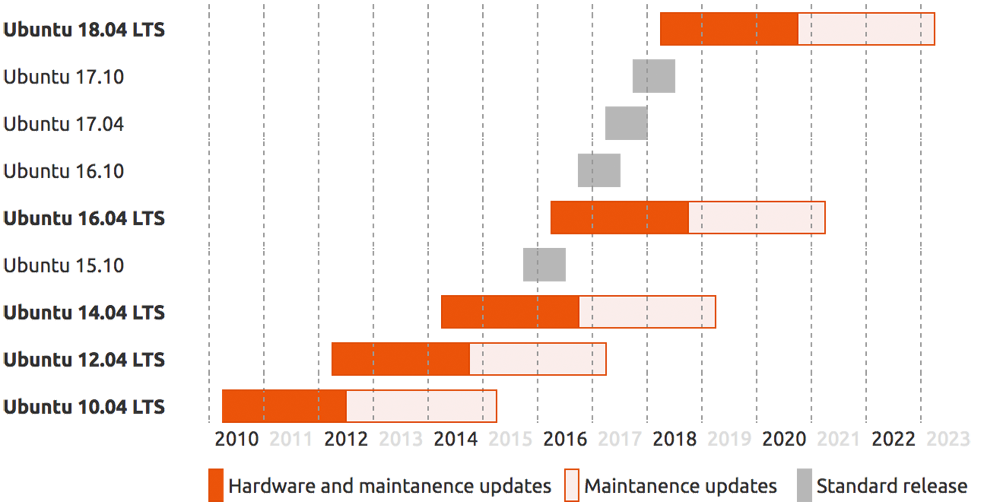
Regular releases are supported for 9 months.
Packages in main and restricted are supported for 5 years in long term support (LTS) releases. Flavors generally support their packages for 3 years in LTS releases but there are exceptions. See the release notes for specific details.
Release cadence
Releases are published in a time based fashion, every 6 months, following a planned schedule.
Release team
Visit the release team page.
To find your release

Lts Release Meaning
Unity Lts Release
Open a terminal and type
CategoryDerivatives
Linux Lts Release

Java Lts Release Schedule
Releases (last edited 2020-10-28 19:04:03 by brian-murray)