
The author of this epistle is the apostle Paul as stated in Colossians 1:1. The Epistle to the Colossians is one of the Prison Epistles which are so called because they were written by Paul while he was in prison in Rome. The Prison Epistles include Ephesians, Philippians, Colossians, and the very personal Epistle to Philemon.
Colossians 3:1-3 - If then you have been raised with Christ, seek the things that are above, where Christ is seated at the right hand of God. Set your minds on things that are above, not on things that are on earth. For you have died, and your life is hidden with Christ in God.
Do you remember those days in school when right after lunch you'd be looking out the window and daydreaming? If I didn't watch myself, the teacher might even catch me and say, 'Seltz, get your head out of the clouds and back into class.'
Get your head out of the clouds.
Well, if that was a call to get serious, our lesson today is telling us to get even more serious. It's telling us to get our head in the clouds.
The apostle Paul tells us to keep our focus on Christ. Since we 'have been raised with Christ'—baptized in His Name, our sins have been buried with Him, and our resurrected life is already assured in Him. So let's live that life right now, for all its worth, because our destiny is already secure in the life, death, and resurrection of Jesus.
Life in Christ is an out-of-the-gutter kind of life. It's a life that turns its back on sin, immorality, guilt, and ignorance. Redeemed from that, we move into the streets, addressing life's realities with forgiveness, compassion, and purposeful service. With our focus on the things above in Jesus, we are free to serve God and the people we love.
So, get ready for that. Get your head into the clouds, into the things of Jesus Christ, to live life boldly in the world right now!
In my neighborhood when I was young, there were 20 guys on the block. We had football teams, hockey teams, basketball teams, baseball teams. There were so many guys playing, sometimes you didn't even get picked for a team. When that happened to me, it made me want to get even better.
And here's the point: if you weren't picked right away, you still had to be ready. You still had to watch every play and listen to every call because if someone got hurt or tired, your name might get called. 'All right, Greg, you're in!'
You had to be ready to go, because the ball could be coming to you; there was a block you had to make; or you had to defend the goal line.
When Paul tells us to set our minds on the things above, he's telling us not to daydream or to let our minds wander. He's telling us to get focused—to get not only our heads—but our hearts and our bodies—into the game.
And if I hear the message of Colossians rightly, Paul is saying God has already chosen you in Jesus. So with your head in the clouds, keep your heart and mind pressing on for Him.
THE PRAYER: Dear Lord Jesus, give us eyes of faith to see clearly the life You have given us to live, with our hearts rejoicing in Your grace, and our minds set on the things above. Amen.
This Daily Devotion is excerpted from 'Get Your Head in the Clouds,' a message by Rev. Dr. Gregory Seltz, former Speaker of The Lutheran Hour.
Reflection Questions:
1. Did you learn any 'life lessons' from playing sports as a kid? What were they?
2. What do you think the apostle Paul meant when he said the Christian's life is 'hidden with Christ in God'?
3. Do you feel like you're alert and ready to act when life throws you an opportunity? Can you give any recent examples?
- STUDY ON COLOSSIANS - by Jeanette Berntson. This is a letter the apostle Paul wrote to the church in Colossae. Colossae was the prominent town in the Lycos Valley of Phrygia in Asia Minor (modern day Turkey). Hierapolis and Laodicea were also in that valley. Paul most likely wrote this letter when he was under house arrest in Rome in c. AD 60 (Acts 28.).
- Title: Book of Colossians - Free Bible study questions, class book, workbook, assignments, and study material; available free at www.gospelway.com.
- Colossians 1, Martin Luther's Commentary on Galatians, One of over 110 Bible commentaries freely available, this commentary by Martin Luther, presents the justification of the sinner by faith alone StudyLıght.org.
Today's Bible Readings: Exodus 36-38Mark 4:1-20
To Download Devotion MP3 to your computer, right click here and select 'Save Link As' or 'Save Target As' or 'Download Linked File As'
Colossians
A Bible Study
Outline
I. Introduction (1:1-14)
A. Greetings (1:1-2)
B. Thanksgiving (1:3-8)
C. Prayer (1:9-14)
II. The Supremacy of Christ (1:15-2:23)
A. The Full Glory of Christ, the Son of God (Colossians 1:15-23)
B. The Full Glory of the Gospel (Colossians 1:24-2:5)
C. The Refutation of the Colossian Heresy (Colossians 2:6-23)
III. Life In The All-Sufficient Christ (Colossians 3:1-4:6)
A. Seek The Things That Are Above, Where Christ Is (Colossians 3:1-17)
B. Christ the Lord of the Household (Colossians 3:18-4:1)
C. Vigilance in Prayer, Wisdom Toward the World (Colossians 4:2-6)
IV. Conclusion: Personal Matters (Colossians 4:7-18)
Author, Date and Place of Writing
The fact that Colossians is a genuine letter of Paul is not usually disputed. In theearly church, all who speak on the subject of authorship ascribe it to St. Paul.
In the 19th century, however, some thought that the heresy refuted in chapter two wassecond-century Gnosticism. But a careful analysis of chapter two shows that the heresythere referred to is noticeably less developed than the Gnosticism of the leading Gnosticteachers of the second and third centuries. We must remember that already in the firstcentury the seeds that gave way to this second century heresy were already at work.
Colossians is to be best dates during Paul's first imprisonment in the city of Rome,where he spent at least two years under house arrest (see Acts 28:16-31). Some have arguedthat Paul wrote Colossians from Ephesus or Caesarea, but most of the evidence favors Romeas the place where Paul penned all the Prison Letters (Ephesians, Colossians, Philippiansand Philemon.)
Colossians should be dated as close to the year 60 A.D., in the same year as Ephesiansand Philemon.
Colosse: The Town and the Church
Several hundred years before Paul's day, Colosse had been a leading city in Asia Minor(present-day Turkey). It was located on the Lycus River and on the great east-west traderoute leading from Ephesus on the Aegean Sea to the Euphrates River. By the first centuryA.D. Colosse was diminished to a second-rate market town, which had been surpassed longago in power and importance by the neighboring towns of Lacdicea and Hierapolis (seeColossians 4:13)
What gave Colosse New Testament importance, however, was the fact that, during Paul'sthree-year ministry in Ephesus, Epaphras had been converted and had carried the gospel toColosse (cf. Colossians 1:7-8; Acts 10:19:10). The young church that resulted then becamethe target of heritical attack, which led to Epaphras's visit to Paul in Rome andultimately to the penning of the Colossian letter.
Perhaps as a result of the efforts of Epaphras or other converts of Paul Christianchurches had also been established in Laodicea and Hierapolis. Some of them were housechurches (see Colossians 4:15; Philemon). Most likely all of them were primarily Gentile.
The Colossian Heresy
Paul never explicitly describes the false teaching he opposes in the Colossian letter.The nature of the heresy must be inferred from statements he made in opposition to thefalse teachers. An analysis of his refutation suggests that the heresy was diverse innature. Some of the elements of its teachings were...
1. Ceremonialism-It held to strict rules about the kinds of permissible food and drink, religious festivals (Colossians 2:16-173 and circumcision (Colossians 2:11; 3:11)
2. Asceticism-'Do not handle! Do not taste! Do not touch! (Cf. Colossians 2:21; 2:23)
3. Angel worship-(Colossians 2:18)
4. Deprecation of Christ-This is implied in Paul's stress on the supremacy of Christ. (Colossians 1:15-20; 2:2-3,9)
5. Secret knowledge-The Gnostics boasted of this (see Colossians 2:18; and Paul's emphasis in 2:2-3 on Christ, 'in whom are hidden all the treasures of wisdom')
6. Reliance on human wisdom and tradition-(see Colossians 2:4,8)

These elements seem to fall into two categories, Jewish and gnostic. It is likely,therefore, that the Colossian heresy was a mixture of an extreme form of Judaism and anearly stage of Gnosticism.
Purpose and Theme
Paul's purpose is to refute the Colossian heresy. To accomplish this goal, he exaltsChrist as the very image of God (1:15) the Creator (1:16), the preexistent sustainer ofall things (1:17), the head of the church (1:18), the first to be resurrected (1:18), thefullness of diety in bodily form (1:19; 2:9) and the reconciler (1:20-22). Thus, Christ iscompletely adequate. We 'have been given fullness in Christ' (2:10). On theother hand, the Colossian heresy was altogether inadequate. It was a hollow and deceptivephilosophy (2:8), lacking any ability to restrain the old sinful nature (2:23)
The theme of Colossians is the complete adequacy of Christ as contrasted with theemptiness of mere human philosophy.
I. Introduction: Salutation, Thanksgiving, and Prayer.(Colossians 1:1-14)
Paul gives thanks for the Colossians' faith and love, a loveinspired and sustained by the hope laid up for you in heaven. He assures them thatthe gospel which has produced this in them, which they had heard from Epaphras,is the true, universal, powerful, and productive Gospel, preached in the whole world,proclaiming and conveying the grace of God in truth. (This is the gospel whichneeds no supplementation by 'philosophy' and 'human tradition', cf.Colossians 2:6-8)
Paul prays that they may grow in the knowledge of this Gospel, a knowledge ofGod's gracious will (not of empty speculations) which produces a life rich in everygood work, increasing as it is employed in the service of the Lord, the beloved Sonof God, King of a kingdom whose subjects have redemption, the forgiveness ofsins, now and the hope of an inheritance in the bright future world of God.
Paul prays that God the Father, who has given them their present blessing and theirglorious future, may strengthen them to endure with patience the pressure of thepresent and that the lives of the Colossians, lived in the power bestowed by Him,may be an unbroken song of thanksgiving to Him.
II. The Sufficiency of Christ (Colossians 1:15-2:23)
A. The Full Glory of Christ, the Son of God (Colossians 1:15-23)
The mention of God's beloved Son, who is God's redemption and forgiveness in person (verses 13-14), leads over to a mighty hymn in praise of Christ in His fully glory as Creator and Redeemer. Paul holds before the eyes of the church all that they have in Him whom Epaphras (verse 7) proclaimed to them...

He is God's image, the perfect manifestation of the invisible God; the first-born of all creation, the Mediator of creation the Lord over all created beings, including all angelic powers (thrones, dominions, principalities, authorities).
As He is Lord of creation, He is also head of the church; as He is the first-born of all creation, He is also the first-born from the dead, the Lord in whom all mankind may find life everlasting.
In Him all the fullness of the God who willed man's redemption GRACIOUSLY DWELT: IN OBEDIENCE TO THAT WILL He went into the depths of a criminal's violent death (death of His cross) to restore man and all man's fallen world to God.
He is in everything...pre-eminent; in His kingdom (verse 13) they are secure--no powers of darkness have power to harm them there.
B. The Full Glory of the Gospel (Colossians 1:24-2:5)
The Colossians have this Christ as their Reconciler and Justifier in the Gospel and in it alone (verse23). The Gospel is therefore infinitely precious.
Paul rejoices to suffer in its behalf as he toils with Christ inspired energy to proclaim it. The Gospel is universal in its scope and power, proclaiming the revealed secret of God (mystery, verse 27) far beyond the limits of His ancient people, bestowing the riches of the glory of His grace on the Gentiles: it is present and powerful for every man, to make every man mature in Christ.
The Gospel is complete and sufficient, the sure ground of hope, faith, and love and the source of all understanding and knowledge.

Any pretense of a higher knowledge, beyond the Christ proclaimed in the Gospel, is delusion and deceit, for in Christ all the treasures of wisdom and knowledge are to be found.
In the power of this Gospel the church can be (what the Colossians are now) an ordered and disciplined army of the living God of heaven.
C. The Refutation of the Colossian Heresy (Colossians 2:6-23)
Paul has one weapon of offense: Jesus Christ. In the opening verses (verses 6-7) he bids the Colossians base their whole existence on Him. He is to soil in which they have taken root, from which they continue to draw nourishment and strength.
Jesus is also the foundation on which the growing structure of their life rests and rises. In Him they have the firmness of faith which Paul rejoiced to behold (established, verse 7) in Him. Christ is the one whom they know, for whom they continually give thanks to the Father (Colossians 1:12).
III. Life In The All-Sufficient Christ (Colossians 3:1-4:6)
Colossians Qaindepthonline Lutheran Bible Study Lessons
As Christ is the whole Gospel and the whole refutation of all distortions of the Gospel(Colossians 1:15-2:23), so He is the whole basis and power of the new life of those whobelieve in Him. His name, (Christ, Lord, Lord Jesus, Lord Christ) occurs 15 times in this31 verse section!
A. Seek The Things That Are Above, Where Christ Is (Colossians 3:1-17)
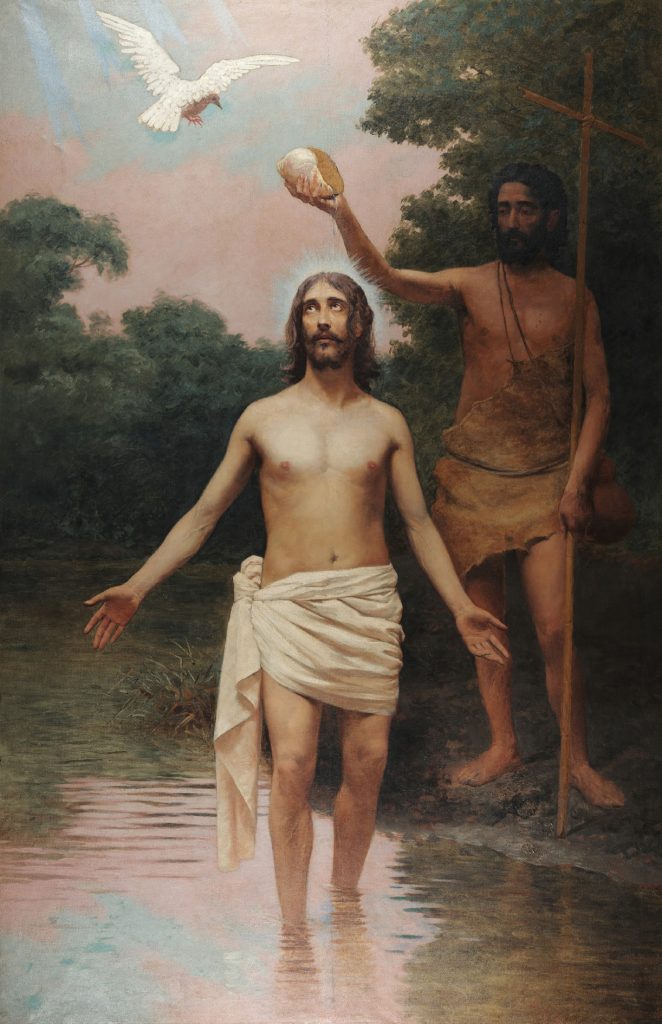
The reality of the Christian life is to be seen in Christ; nothing is more real than the fact that Christians have died with Him, have been raised with Him and share the glory of His life in God.
But that glory is as yet a hidden glory; until the Christ who is their life appears, its glory is a reality to be realized and manifested in a life whose bent and intent (seek, verse 1; set your minds, verse 2) is militant no to what is earthly, to the old world to which the Christian has died.
It is also a no to the old world of erotic self-assertion (verse 5) and economic self-assertion (covetousness, verse 5) to the old world of heroic self-assertion (verse8), the old world of devious self-assertion, the life (verse 9), and the old world in which fragment mankind (verse 11) has a system of ethnic, religious, cultural and social divisions.
The Christian has died to all of that (verse 3) in Christ; and this death is realized in his putting to death all of that. His resurrection to glory realized in His enacted yes to God's recreating act (verse 10)
His continual putting on (verse 12) of the garment in which God's elective love (verse 12) has clothed him keeps the Christian in grace.
He also speaks his yes to God's love in a life of compassionate, meek, forgiving love (verses 12, 14). This life is one in which the peace of Christ controls all relationships (verse 15)
The Christian also calls on His potent word which is the indwelling power that produces salutary and grateful song (verse 16)
In conclusion Paul reminds us that all of this (everything) is done in the name of the Lord Jesus--what the incarnate Lord is, has done, and signifies for man is the source and power of it all! (verse 17)
B. Christ the Lord of the Household (Colossians 3:18-4:1)
The hidden glory of the new life manifests itself in the ordinary household relationships of wife and husband children and parents, slaves and masters.
The glory is hidden; things remain as they were, the old order of subordination and obedience lives on. And yet all is new, for Christ has become Lord over both the obedient and the obeyed.
Colossians Qaindepthonline Lutheran Bible Study Bible
According to Colossians 3:22 slaves were considered a part of the household.
C. Vigilance in Prayer, Wisdom Toward the World (Colossians 4:2-6)
The new life is a vigilant life of continual prayer, particularly prayer for the progress of the Word, the proclamation of the mystery of Christ (verses 3-4)
The new life is itself a proclamation of the mystery to the world (outsiders, verse 5) a witness which calls for the gift of wisdom (verse 5) and for speech marked by Christian taste and tact (seasoned with salt, verse 6)
IV. Conclusion: Personal Matters (Colossians 4:7-18)
The last paragraphs deal with the sending of Tychicus, the bearer of the letter, andthe return of the Colossian slave Onesimus; convey greetings, direct an exchange ofletters between Colossae and the neighboring town of Laodicea; and charge Archippus tofulfill his ministry.
Paul concludes with a greeting written with his own hand, (see Galatians) a renewalrequest for their intercessions, and a brief benediction.
These are personal matters, to be sure; but with Paul there is no difference betweenpersonal and official aspects of his life.
Colossians Qaindepthonline Lutheran Bible Study Commentary
+ SOLI DEO GLORIA +
Colossians Qaindepthonline Lutheran Bible Study Guide
Sources
ConcordiaSelf Study Bible – New International Version, Robert G. Hoerber Editor Concordia Publishing House St. Louis, MO. 1986pp.1824-1825
Concordia Self Study Commentary Martin H.Franzmann, Concordia Publishing House, St.Louis, MO. 1979 pp.199-204